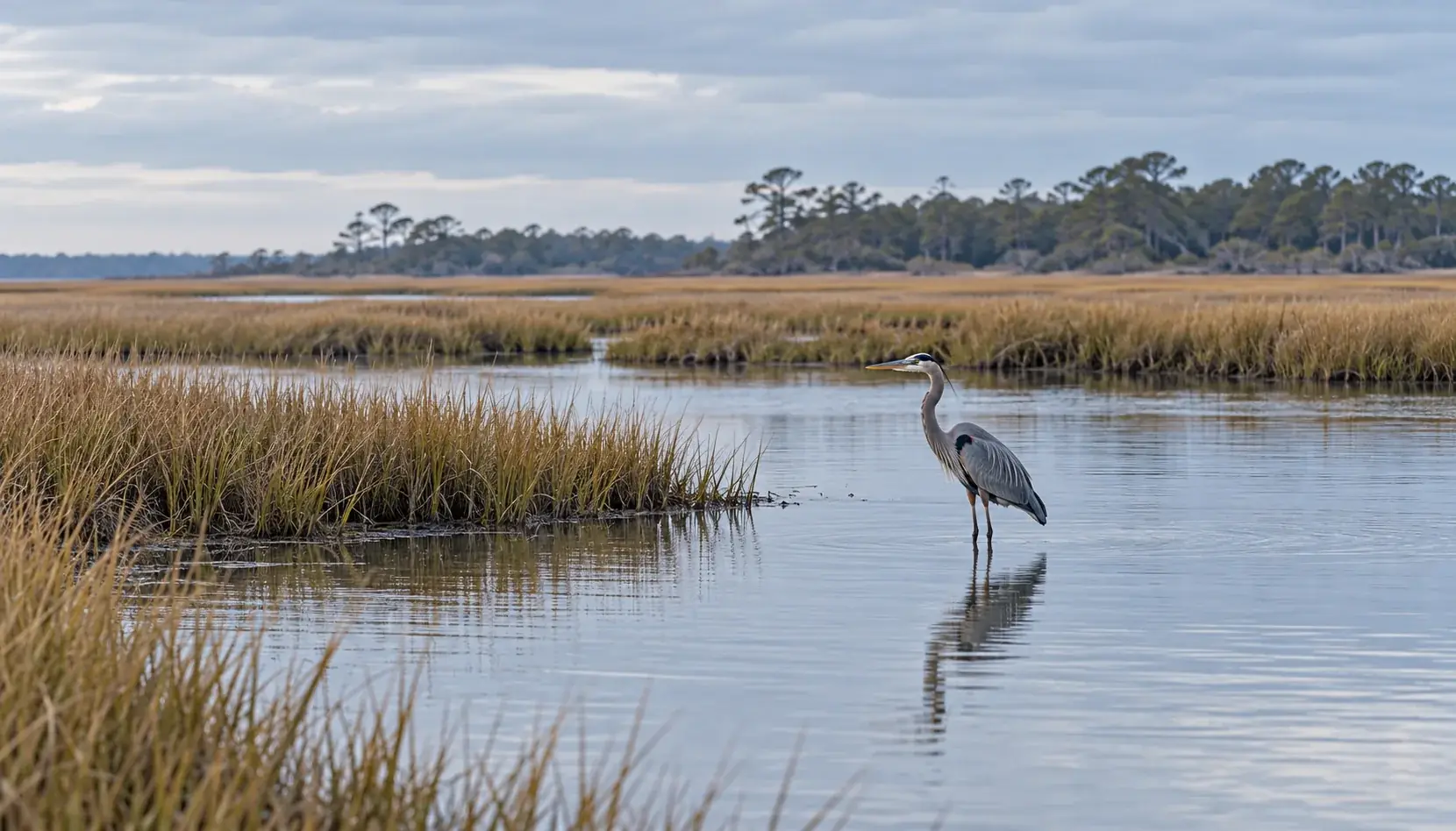
A pair of binoculars can give a winter walk near Wilmington a different purpose. Choose Fort Fisher for marsh views, Carolina Beach State Park for woods and wetlands, or Halyburton for a paved path within the city. You can start with whichever walk suits your group and spend a little longer watching what moves beside it.
Winter has a particular attraction for coastal birdwatchers. The N.C. Wildlife Resources Commission identifies it as a good season for waterfowl along the coast, while woodland outings offer another setting for observing resident birds. The species below are possibilities in the region’s winter habitats; sightings vary with the place, weather and day. A first visit doesn’t need a long species list or a tour of every local habitat. Pick one place, dress for standing still as well as walking, and leave room to stop.
Choose the walk before the birds
The biggest difference between these outings is what happens underfoot. A sandy trail to a marsh overlook asks more of your group than a short paved walk, especially when someone gets cold or wants to turn back. Choose the route everyone can enjoy even if the birds stay out of sight.
Marsh, woodland or a paved park path
| Place | Walk | Setting and footing | Choose it when |
|---|---|---|---|
| Fort Fisher Basin Trail | 2.2 miles out and back | Marsh and maritime forest; natural ground, sand and boardwalk | You want an observation deck and are comfortable walking on sand. |
| Carolina Beach State Park | Flytrap: 0.5-mile loop; Sugarloaf: 3-mile loop | Woodland and wetland habitats; natural ground, with sand on Sugarloaf and boardwalk on parts of Flytrap | You want a choice between a short habitat walk and a longer outing. |
| Halyburton Park | 1.3-mile perimeter path | Paved path through a sandhills preserve | Paved walking matters more than a coastal overlook. |
These are alternative outings in different parts of the Wilmington area. Plan transport to your chosen park rather than treating them as consecutive stops on one walk. If you’re still choosing the rest of the trip, our Wilmington winter guide pairs outdoor time with meals and indoor alternatives.
Fort Fisher for a marsh overlook
At Fort Fisher State Recreation Area, the Basin Trail ends at a wooden observation deck looking across the Cape Fear River and toward Zeke’s Island. Start at the park office at 1000 Loggerhead Road in Kure Beach. The official trail guide lists 1.1 miles each way, with sand and boardwalk mixed into the natural surface.
There is something to notice along the route even when birds are distant. The trail passes the World War II bunker associated with Robert E. Harrell, known as the Fort Fisher Hermit, before reaching the deck. Bring binoculars if you have them and give yourself time to look across the water once you arrive.
On the water, watch for buffleheads, small diving ducks that spend winter along North Carolina’s coast. The Carolina Bird Club’s species account specifically notes wintering birds around Fort Fisher and Kure Beach. Scan the water from your chosen viewing point and give yourself time to watch between dives.
A male has a white body and a large white patch around the back of its dark head. Females are browner, with a smaller white cheek patch. These ducks dive for food, so a bird you’ve just found can disappear underwater and surface again nearby. Cornell’s bufflehead guide shows both sexes and their distinctive markings.
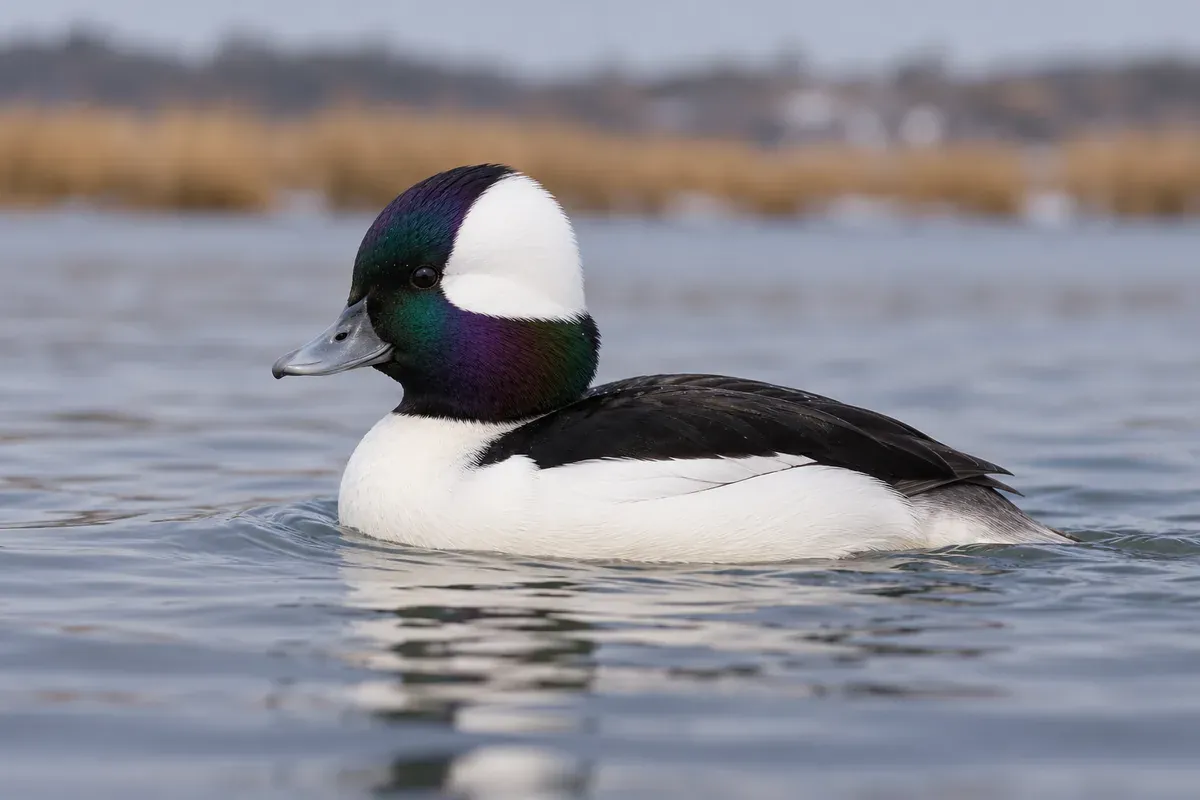
Male bufflehead, generated species illustration. The large white head patch is behind the eye; females have a smaller white cheek patch.
Choose this outing when a marsh view is the main attraction and your group is comfortable with sandy footing. The full return walk is 2.2 miles, so check how everyone feels before carrying on to the end. If your main priority is firm, paved walking, Halyburton is the more useful starting choice.
The recreation area’s visitor information lists winter park gates from 8 a.m. to 6 p.m. in November through February and a Christmas Day closure. Ordinary pedestrian day use has no entrance fee; the beach-driving passes advertised on the site are separate. Plan to return to your car well before the gate closes.
The nearby Fort Fisher historic site is a separate attraction. Use the recreation area’s information for this trail, and add a history visit only if its opening days and your group’s energy allow.
Carolina Beach State Park for woods and wetlands
Carolina Beach State Park offers two quite different walking commitments. Sugarloaf Trail is a 3-mile loop from the marina parking area, passing through several habitats on natural ground and sand. Flytrap Trail is a half-mile loop from the parking area at the end of Nature Trail Lane. Choose the shorter route if you want time to watch without making a longer hike the main event.
The park’s trail descriptions trace Sugarloaf through evergreen forest, tidal cypress-gum swamp and longleaf pine savanna. Flytrap passes through wetlands and pine habitat, with boardwalk along parts of the loop. The park designates Flytrap wheelchair-accessible, though checking current conditions remains useful for anyone relying on a particular surface.
The park’s birdwatching information describes habitat for resident land birds in winter. Spend some of your walk watching the woodland and wetland edges. A yellow-rumped warbler is one regional winter visitor to learn before you go. The Carolina Bird Club describes it as a common winter bird along the coast.
In winter plumage, this small songbird looks fairly subdued, with brownish-gray feathers and a yellow patch just above the tail. The eastern form, often called the Myrtle warbler, has a white throat. Its ability to digest the waxy fruits of bayberry and wax myrtle helps it eat berries through winter. Cornell’s life-history guide describes that seasonal change in diet. Watch fruiting shrubs from the path, giving a feeding bird enough space to stay put.
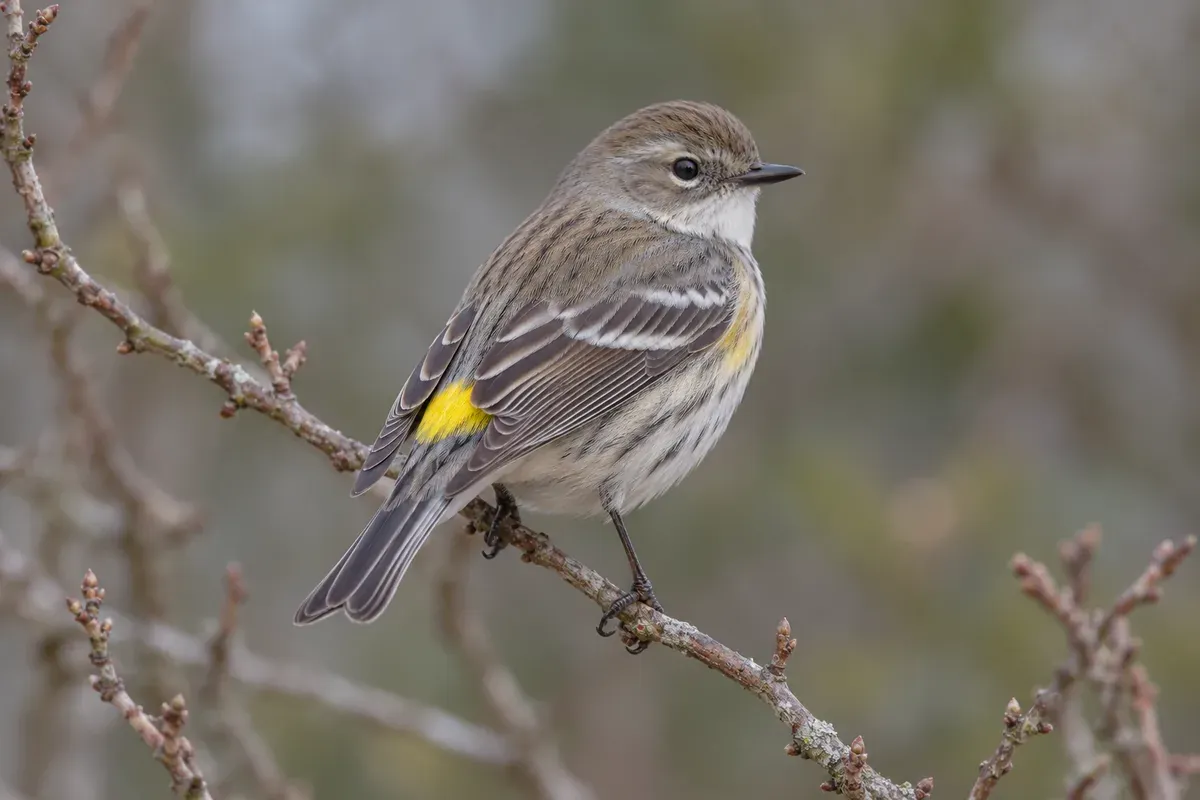
Yellow-rumped warbler in winter plumage, generated species illustration. The yellow rump sits just above the tail. Appearance varies with age and sex; this is the eastern, white-throated form.
The Flytrap Trail’s name doesn’t promise visible carnivorous plants in winter. Our Flytrap Trail guide has more on the plants and the walk.
For arrival, use 1010 State Park Road in Carolina Beach. The park’s seasonal schedule lists gates from 7 a.m. to 7 p.m. in November and February, and 7 a.m. to 6 p.m. in December and January. It closes on Christmas Day. Hiking has no day-use admission charge. This park has no Atlantic Ocean beach access, so choose it for its trails rather than an oceanfront walk.
Halyburton for a paved outing in Wilmington
Halyburton Park, at 4099 S. 17th St., is the choice when you’d prefer pavement to sandy coastal trails. The city’s park description lists a 1.3-mile paved perimeter path through a preserve of gently rolling sandhills. You can spend your time looking into the surrounding habitat without taking on the Basin Trail’s mixed footing.
Treat this as a woodland outing and listen before moving on. A Carolina chickadee is a small, round songbird to watch for among the branches, with a black cap and bib separated by white cheeks. A year-round resident of the Southeast, it stays in the region through winter rather than migrating away. Audubon’s species guide describes its range and markings.
Chickadees are active feeders. They search leaves and bark for insects and may hang upside down to reach food, according to Cornell’s life-history guide. If you find one, pause and watch the neighboring branches before continuing. Cornell also describes small winter flocks, so there may be more than one bird moving through the trees.
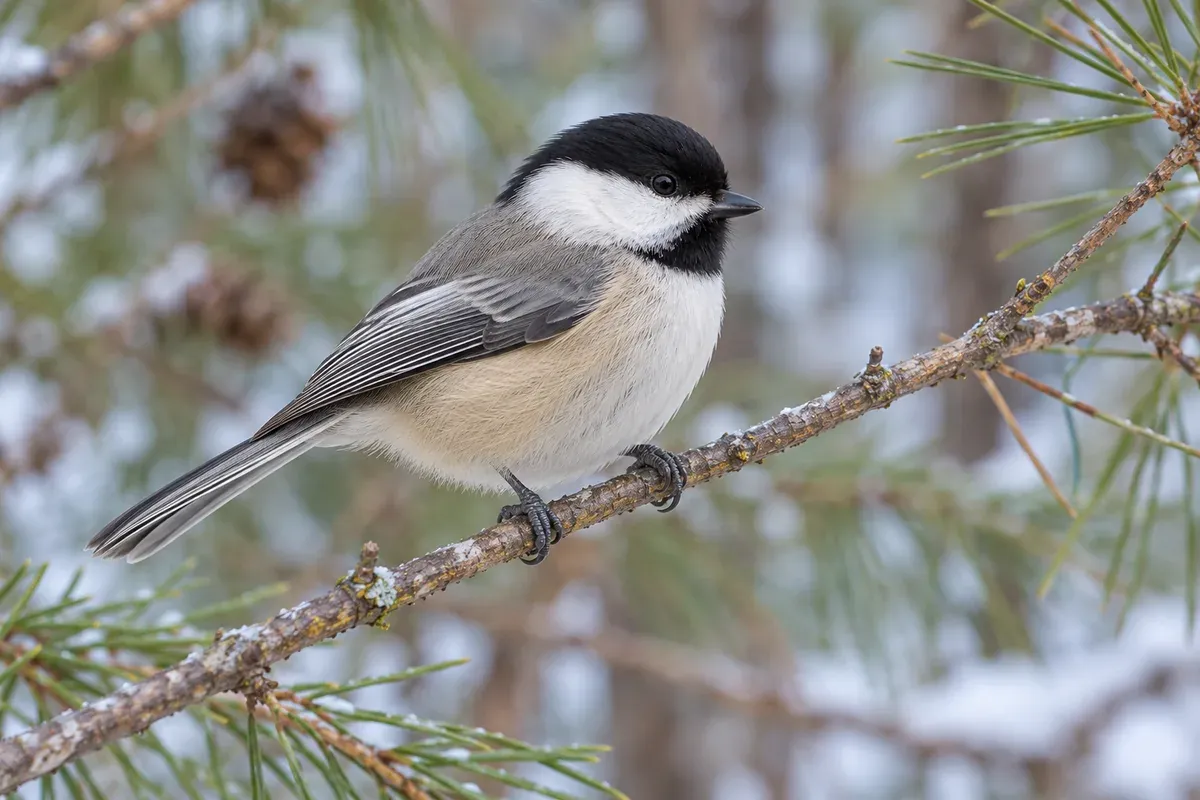
Carolina chickadee, generated species illustration. Look for the white cheeks between the black cap and bib.
Keep the walk short if your group is more interested in a few pauses than a full loop. Halyburton belongs in this comparison for the kind of walk it offers; it isn’t a substitute for an open marsh view.
The city currently lists Shelter 1 as closed following a fire. Check the park page for updates if a sheltered picnic is part of the plan. The Nature Center has its own schedule: Monday through Saturday, 9 a.m. to 5 p.m. from March through November, and 11 a.m. to 4 p.m. from December through February. Those are building hours. Check outdoor park access separately if you’re planning an early or late visit.
Watch for movement before reaching for a name
For a beginner, noticing what a bird is doing is a useful first step. Watch where it feeds, how it moves and whether it stays alone or with a group. A brief note about shape or behavior gives you something to compare with a field guide after the bird has gone.
NC Wildlife advises finding a bird with your eyes before raising binoculars. Practice on a stationary feature first so you can bring it into view without searching through the lenses. At a woodland stop, pause long enough to listen; at a marsh overlook, give yourself time to scan a small section of water instead of trying to examine the whole view at once.
Keep your distance and stay on designated paths. The commission’s guidance emphasizes quiet observation and warns against excessive playback of bird calls. If a bird moves away as you approach, stop following it and watch from farther back. A photograph or identification can wait.
Leave time to stand still
A walk that feels comfortable at a steady pace can feel colder during a long pause. Bring a wind-resistant outer layer, something to drink and shoes suited to your route. Leave enough energy for the return walk, especially at Fort Fisher, where reaching the deck is only the halfway point.
Check the hourly forecast and the park’s current alerts before leaving. Wind, rain or an access restriction may make a shorter outing the better plan that day. If the weather closes in, use the winter guide’s indoor alternatives and save the binoculars for another morning.
Once you’re on the trail, you don’t have to finish a list of birds or every mile of a route. Find a place where you can stop without blocking the path, lower your voice, and watch what happens beside the water or among the trees.