Fort Fisher State Historic Site is an easy history stop to add to a Kure Beach day, especially if you want time outdoors as well as a museum. General admission is free, and the site is currently open Tuesday through Saturday, 9 a.m. to 5 p.m. It is closed Sunday, Monday, and designated state holidays. You can walk the earthworks trail on your own or pay for a staff-led tour.
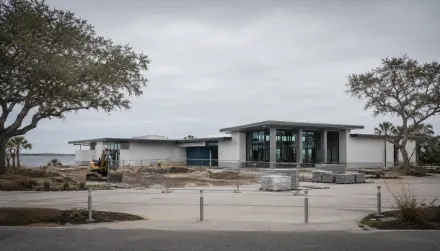
The visitor center that opened in 2024 makes the stop more substantial than an outdoor walk alone. Start inside for the exhibits, then head to the remaining fortifications to see how a fort made largely of earth and sand protected Wilmington’s port. The state’s plan-your-visit page has the current hours, tours, and any schedule alerts; check it before you drive down U.S. 421.
Why Fort Fisher mattered
Fort Fisher guarded the mouth of the Cape Fear River while blockade runners carried supplies into Wilmington. By 1865, Wilmington was the Confederacy’s last major open port, and its route inland was the last one available to Robert E. Lee’s Army of Northern Virginia. U.S. army and navy forces captured the fort on Jan. 15, 1865; Wilmington fell within weeks, cutting that supply line. The state’s history of Fort Fisher explains the fort’s role in the final months of the war.
Outside, you can see the surviving land face and walk past reconstructed gun positions that defended the river entrance. More than 500 enslaved and free Black laborers worked on the fort alongside Confederate soldiers. The 27th U.S. Colored Troops took part in the U.S. assault.
Start inside the 2024 visitor center
On a windy or hot day, the visitor center gives you a useful introduction before you go outside. The two-story building opened to the public on Oct. 30, 2024, replacing a much smaller center from 1965. Its 20,000 square feet include an orientation theater, galleries, a gift shop, and restrooms. The N.C. Department of Natural and Cultural Resources’ opening announcement describes a 100-seat theater and the “Through Their Eyes” exhibit, which follows the area’s history from pre-colonial times through World War II.
“Through Their Eyes” follows the people who lived here across those centuries, including men, women, and children from different backgrounds. If you have limited time, start with the orientation theater and galleries, then head outdoors to see the earthworks and gun positions.
The state says the visitor center and restrooms are fully ADA-compliant. You can ask at the information desk which exhibits or programs are available that day, then decide whether a guided tour fits your schedule.
Walk the earthworks and read the landscape
The tour trail runs roughly half a mile around the remaining fortifications on the river side of U.S. 421. Interpretive panels provide the self-guided route. The state says the trail is accessible except for the restored gun emplacements, so a visitor who needs a step-free route can still see much of the outdoor site while skipping those areas.
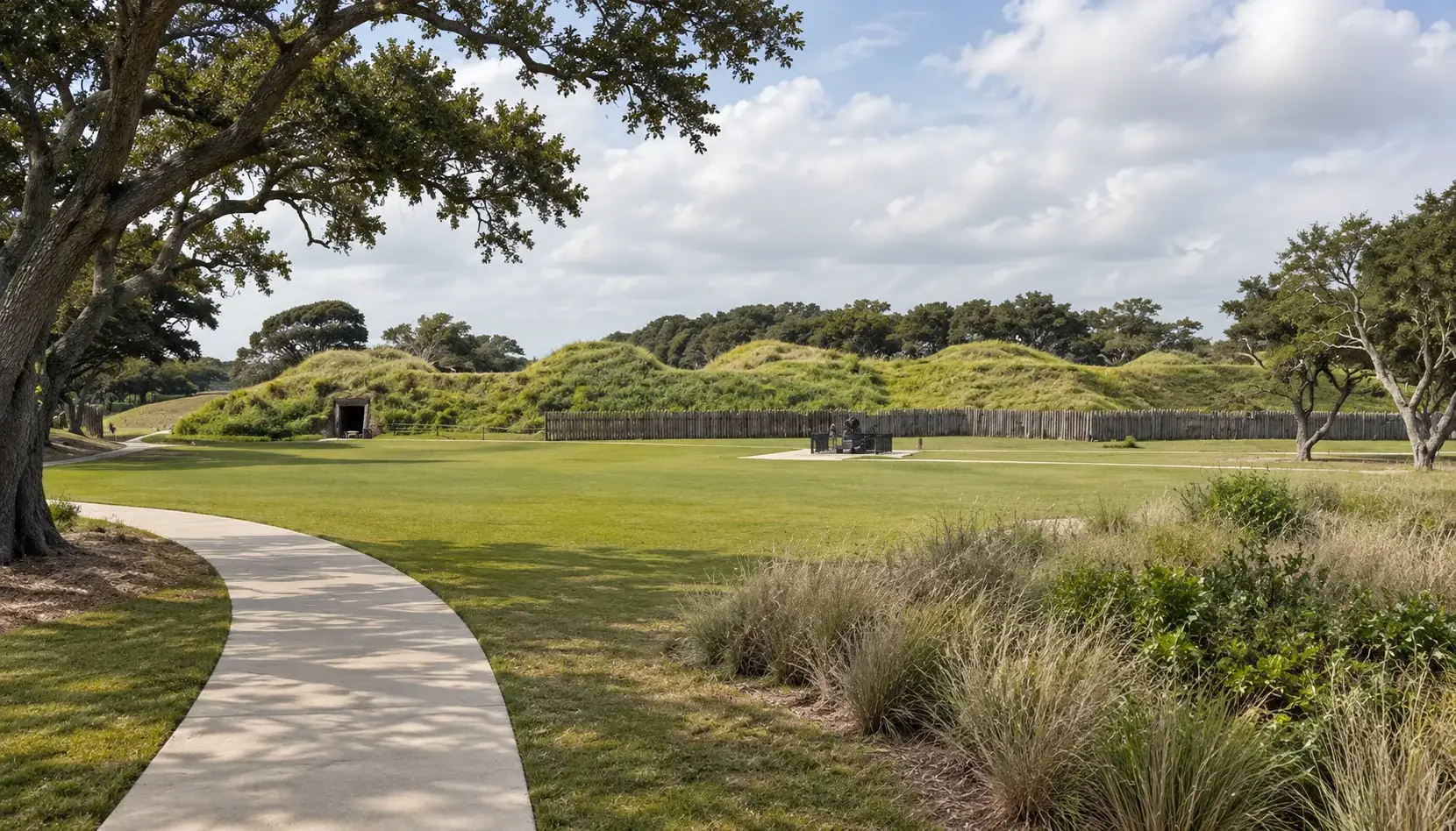
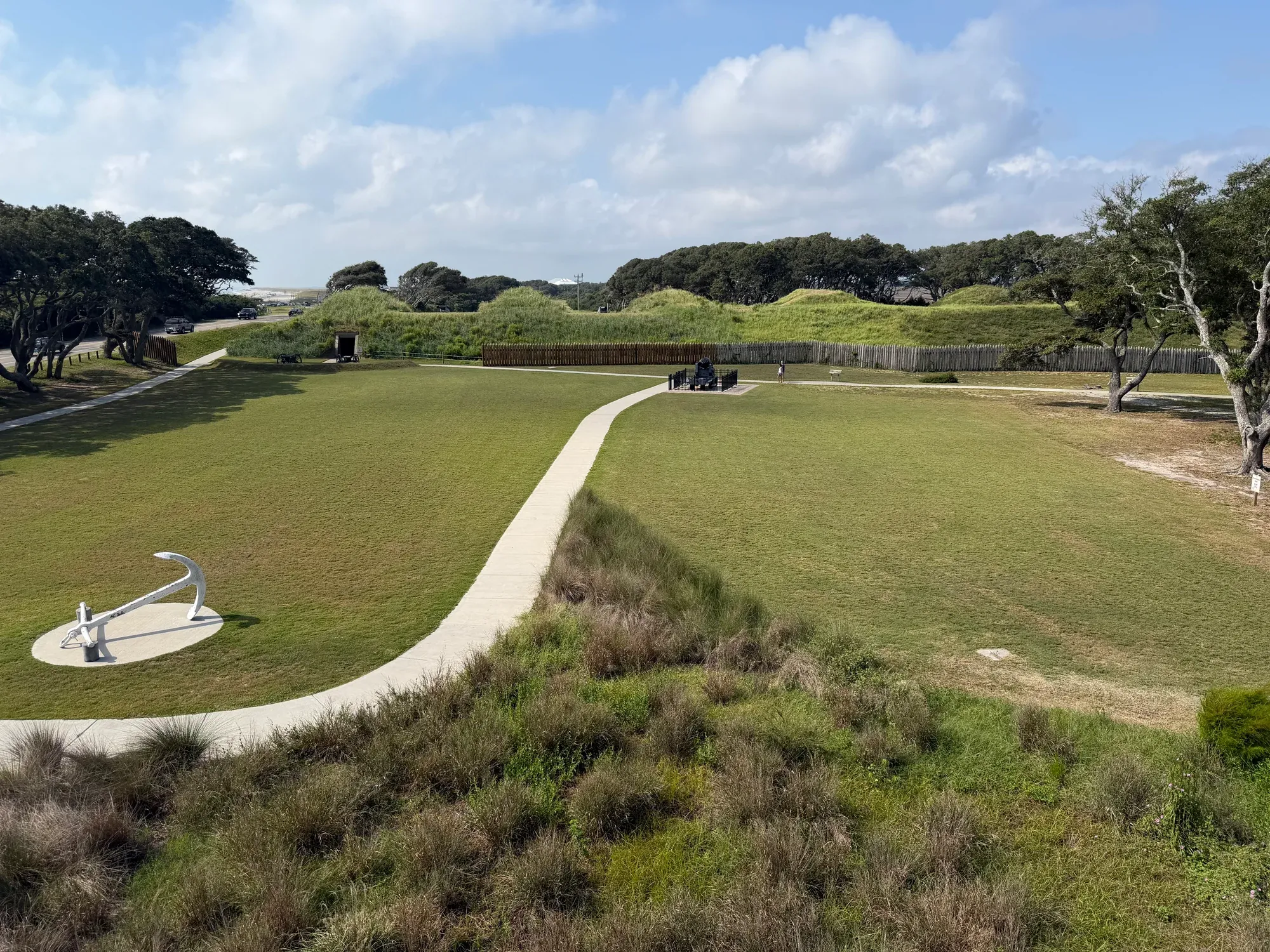
In our photo below, the low grass-covered earthworks rise behind a timber palisade, with a paved path crossing the lawn. Those mounds are easier to understand once you know how little of the original fort survived. The state’s current visit page says less than 10 percent of the earthen fortification remains and identifies rebuilt traverses, a center sally port, an enterable bombproof shelter, and gun positions. The reconstructed sections follow historical records and archaeological evidence; they help show the former shape of the defenses without presenting the entire site as untouched ground.
Fort Fisher’s earthworks and path in a photograph supplied by Wilmington Beach Rentals. The hero image is a representative illustration based on this view.
Earth and sand absorbed heavy shell impacts better than a masonry wall would have. On the trail, the mounds, palisade, and gun positions show how the fort defended the river approach you learned about inside.
The coastline has changed the site since the war. Erosion took much of the ocean-facing fort, and today’s highway divides what remains. The main tour trail is on the river side; the Battle Acre monument and other short walking areas are across U.S. 421 on the ocean side. You don’t need to cross the road to complete the main loop. If you do want to explore the other side, follow the site’s directions and cross the highway carefully rather than treating it as one continuous trail.
The second photograph gives a sense of the shade available in one part of the historic-site grounds. Other stretches are open, so take water and plan for sun or wind depending on the weather. There are no picnic facilities at the historic site, according to the state.
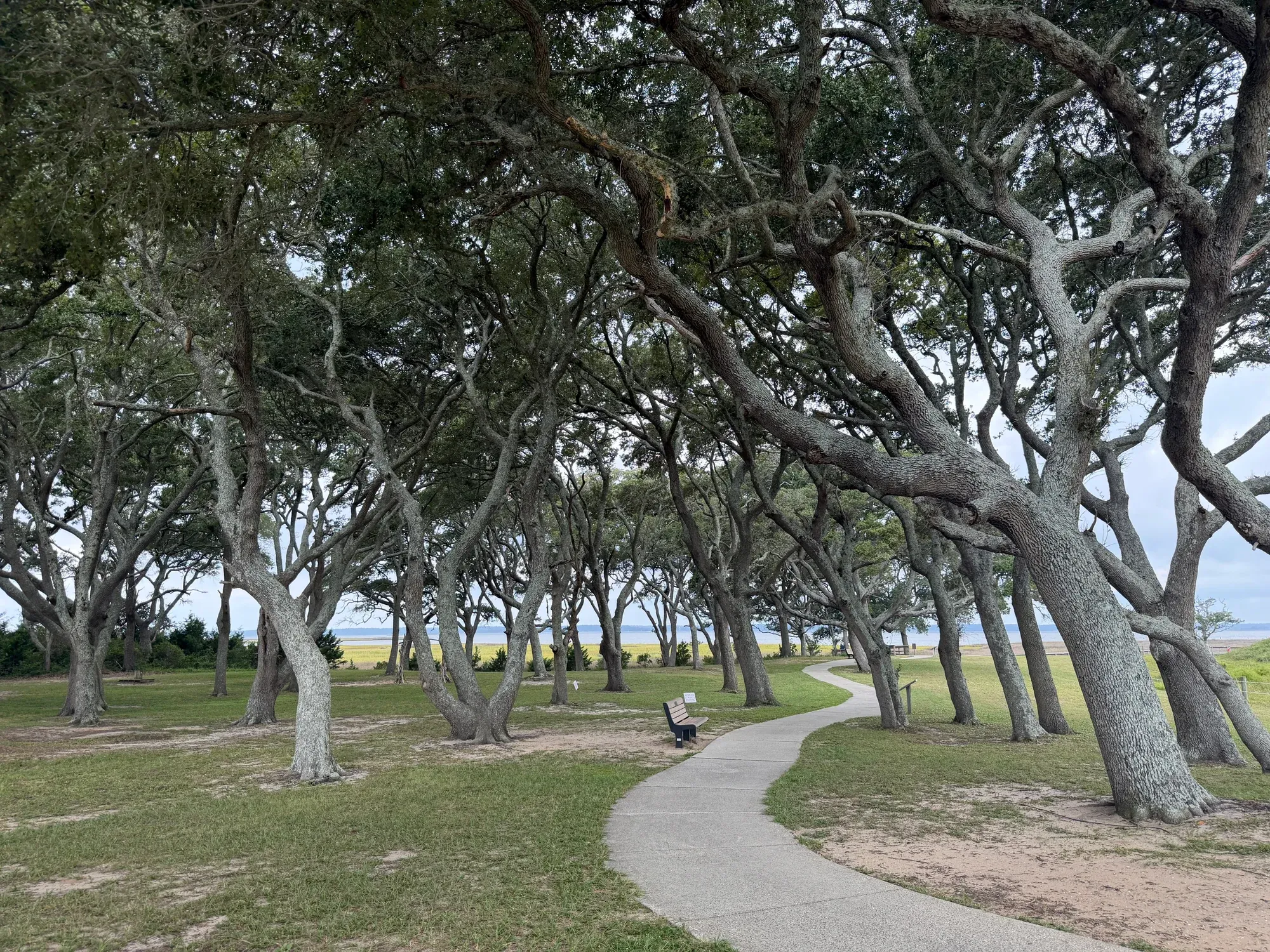
A tree-lined walk on the historic-site grounds. Photo supplied by Wilmington Beach Rentals.
Decide whether a guided tour is worth your time
Walking the trail yourself is free. A staff-led tour is useful if you want someone to connect the surviving earth, the reconstructed positions, and the battles while you are standing among them. Tickets are sold at the visitor center’s first-floor information desk; the state does not offer advance individual booking.
As listed on the current state tour page, the 45-minute Standard Tour costs $5 for adults, $4 for seniors 65 and older and military visitors, and $1 for children ages 3 to 17, plus tax. The 90-minute Above the Scenes Tour costs $10 a person, plus tax, and includes a climb to the top of the earthworks. That climb makes the longer tour a different choice for anyone who needs to stay on the accessible route.
Tour offerings depend on staffing and weather. Call 910-251-7351 on the day of your visit if a particular tour matters to you. Groups of 15 or more should contact the site at least two weeks ahead; the state says reserved groups can request staff-led activities without a fee.
For a self-guided stop, plan roughly 20 to 30 minutes in the visitor center and 30 to 45 minutes outdoors. Use those as flexible planning blocks. A careful read of the galleries, a tour, or a walk over to the ocean-side grounds can easily make this a longer visit.
What else fits on a Fort Fisher day
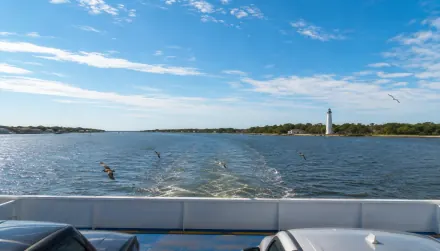
The Southport-Fort Fisher Ferry terminal is farther south along the same road. If the ferry is running when you visit, the fort can be the morning stop before an afternoon crossing. Our Southport ferry day-trip guide covers the route, schedule checks, and what to do on the other shore.
Fort Fisher State Recreation Area is a separate state-park property with beach access and the Basin Trail. The state park’s trail page is the right place to plan that walk; the historic site’s half-mile trail does not continue into the park. If you’d rather end your outing with a meal, our Kure Beach restaurant guide has options farther north in town.
The NC Aquarium at Fort Fisher is not currently an add-on. It closed to the public on May 26, 2026, for a major expansion expected to take about 30 months. Check its reopening news before building a future trip around both attractions.
Make the fort the first stop
Fort Fisher works well at the start of a Kure Beach day. Visit the galleries while everyone is fresh, walk the earthworks at your own pace, and then decide whether to continue toward the ferry, the beach, or lunch. If the museum and trail are the whole outing, the free self-guided visit still gives you a clear picture of why the fort stood here and how much of its ground has changed.
For another local military-history visit, the Battleship NORTH CAROLINA visitor guide covers the ship across the river from downtown Wilmington.