For oysters near Wilmington, start with how you want to spend the day. A restaurant meal leaves room for other plans, an outdoor visit to N. SEA.’s Oyster Barn gives you time to linger with the grower’s oysters, and a boat trip with Epic Excursions adds a look at how oysters are farmed. The food connects these outings, but the amount of planning and time outdoors changes quite a bit.
Late fall and winter are our pick for an oyster-focused trip, with farmed oysters keeping local options available beyond the traditional season. Before ordering, ask for the farm or harvest area and whether the oysters were farmed or wild-harvested. That tells you more about their origins than the word ‘fresh’ on a menu.
Where Wilmington’s oysters come from
An oyster can be both farmed and fresh. Farmed describes how it was raised; wild-harvested means it was collected from a naturally occurring population. Freshness depends on what happens after harvest, including refrigeration and handling. If you want to know whether a cooked dish uses fresh-shucked or previously frozen oysters, ask that separately.
North Carolina farms grow oysters in coastal waters, where they filter naturally available food. Many growers start with hatchery seed and raise it in floating or suspended cages. NC State’s marine science center explains that this method produces individual oysters with more consistent sizes and less grit. Farmed doesn’t mean an oyster was raised on manufactured feed in an indoor tank.
The growing water matters to flavor. NOAA’s oyster guide explains how salinity, temperature and available food influence taste, even within the same species. A saltier oyster and a sweeter, milder one can both be good. Ask which sounds or estuaries are represented on the day’s menu, then choose two origins to compare if they’re available.
What makes a high-quality oyster?
For a half-shell order, look for a well-filled oyster and a preparation you enjoy, with clear information about its origin. North Carolina Sea Grant describes how water-column farming can produce deep-cupped shells with more meat and less grit. Those are useful qualities for serving oysters individually. A larger shell or a stronger salty taste alone doesn’t establish better quality; size and flavor are also preferences.
Freshness and careful handling matter more than a premium-sounding name. For shucked oysters bought at a market, Sea Grant’s seafood-selection guidance recommends plump meat, a natural creamy color and a mild odor. Strong sour or fishy odors are reasons to reject shellfish. Thin meat can also reflect seasonal condition, so don’t treat every difference in fullness as proof of spoilage.
If you’re buying live oysters to cook at your rental, the FDA’s shellfish guidance says to avoid cracked shells and oysters that remain open when tapped. Buy from a seller with properly tagged shellstock. The tags identify the product for traceability; asking where and when it was harvested is more useful than assuming everything sold near the beach came from nearby water.
These checks can help you reject a poor product, but they cannot prove a raw oyster is safe. The CDC warns that harmful germs don’t change an oyster’s appearance, smell or taste, and illness can occur in any month. Proper cooking kills harmful bacteria; lemon juice and hot sauce don’t. People at greater risk of foodborne illness, including pregnant people and those with weakened immune systems, should avoid raw or undercooked shellfish, as the FDA advises.
The best time for Wilmington oysters is late fall through winter
For a trip built around local oysters, we’d choose November through March. This is our planning recommendation, rather than a guarantee about every harvest or menu. It combines the cooler part of the year with North Carolina’s seasonal wild-oyster supply and the farmed oysters available throughout the year. The NC Oyster Trail identifies October as the return of wild oyster season, while farms keep oysters available year-round.
There’s a meat-quality reason to favor the cooler season, too. Oysters that reproduce put energy into spawning during warmer months, which can reduce meat quality. Sea Grant’s explanation of oyster aquaculture explains that triploid oysters devote less energy to reproduction and can retain firm, juicy meat. That helps explain why a farmed summer oyster can still be a worthwhile order. Don’t assume every farm grows the same stock or every summer oyster has spawned.
If you’re visiting in summer, ask which farmed oysters are in good condition that week rather than relying on the old rule about months containing an ‘r.’ For a winter visit, ask what’s being harvested now instead of expecting every named oyster to be available. Cooler weather supports our trip recommendation, but neither winter nor farming removes the risks of eating oysters raw.
Choose a meal, a roast or a farm outing
These are separate choices around the Wilmington area, with different booking requirements. A restaurant reservation can fit around sightseeing, while a public boat departure or a dated roast needs a place in the trip calendar first.
How much of the day do you want to plan around oysters?
| Outing | What it offers | Planning that matters |
|---|---|---|
| Restaurant meal | Rx for raw and cooked choices; Tidewater for an oyster-focused meal; Seabird for a broader downtown seafood dinner | Choose the location and check service, menu and reservations. |
| Oyster Barn | Outdoor Shuck & Chill or a separately ticketed roast in Hampstead | Check the seasonal schedule and forecast. Roast tickets and ordinary visits have different terms. |
| Farm boat outing | Epic Excursions and Middle Sound Mariculture combine a farm visit with an island tasting | Confirm a departure, meeting point, full price and weather terms before booking. |
Three restaurant choices for an oyster meal
Rx for raw and cooked oysters on Castle Street
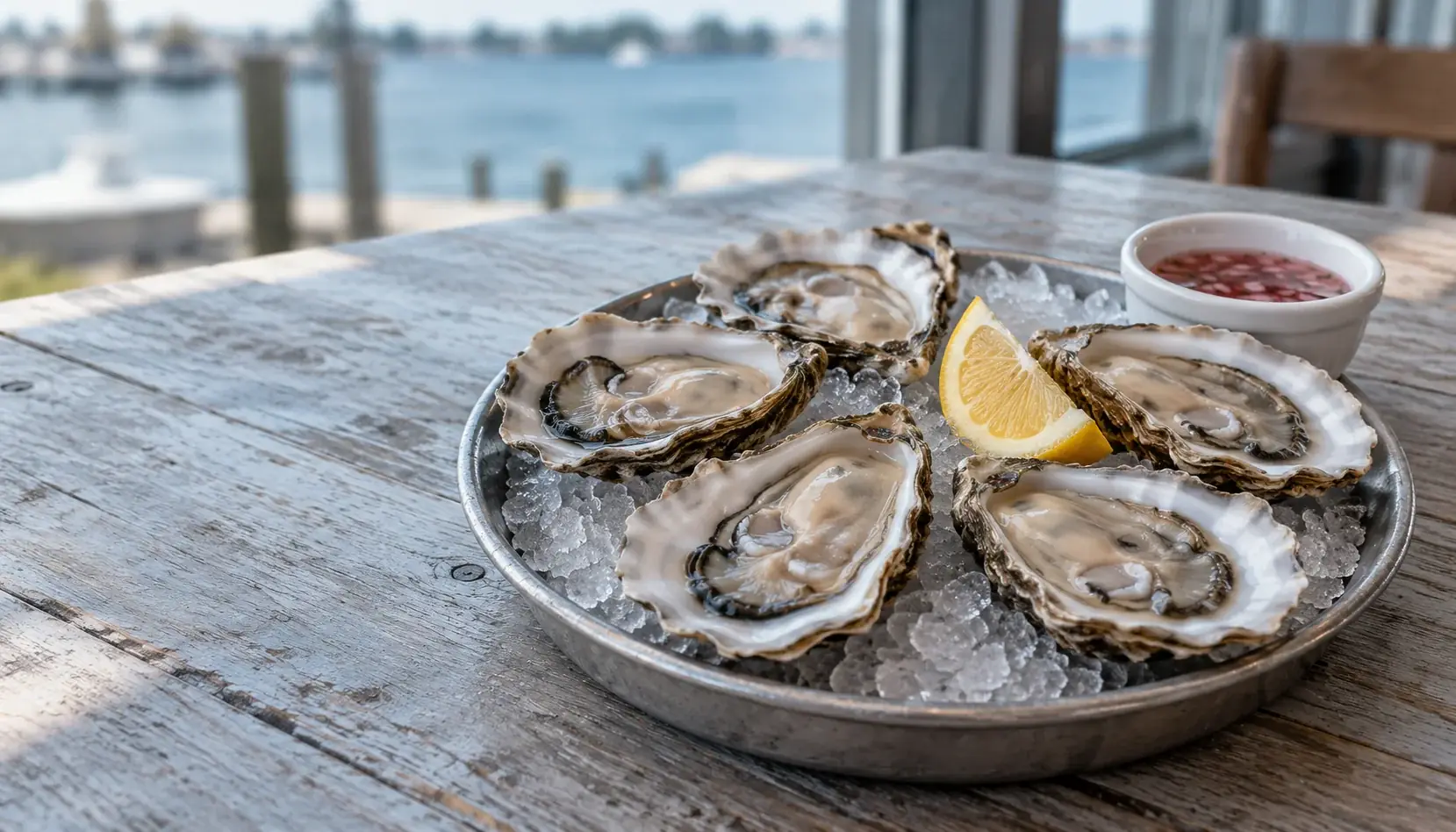
Rx, at 421 Castle St., is a useful choice when the table wants oysters prepared several ways. Its posted menu lists Lucy Bea oysters and rotating North Carolina selections on the half shell, along with Rockefeller, steamed oysters and a fried oyster entree. You can build dinner around oysters without asking everyone to order them raw.
There is a grower connection here, too. Rx’s seafood operation began farming Lucy Bea oysters in Topsail and Stump Sounds in June 2022. The oysters are named for the owners’ dogs, Lucy and Bea. The restaurant also says it harvests wild oysters in season. Ask whether the day’s order is its farmed Lucy Beas or another harvest; the rotating menu doesn’t make every oyster the same product.
The restaurant posts dinner Tuesday through Saturday, 5 to 9 p.m., and Sunday brunch, 10 a.m. to 2 p.m. Menu availability is seasonal, so choose dinner for the broader cooked-oyster selection shown on the dinner menu and check reservations for your date. A weekday lunch plan needs a different restaurant.
Tidewater for oysters and a casual group meal
Tidewater Oyster Bar, at 8211 Market St., Unit DD, puts an oyster stop outside the downtown dinner plan. Its food page describes oysters shucked to order alongside gumbo and po’boys. That gives a group room to order differently while keeping oysters at the center of your meal.
Tidewater also links a separate steam-pot menu. If you’d prefer to eat at your rental, look at that menu and ask about ordering, pickup timing and the contents of the pot you want. A menu category alone doesn’t tell you which shellfish or portions will come with a particular order.
For dining in, the contact page offers bar seating and table reservations. Check the service for the day you want to visit, especially if you’re heading there after another outing. This suits a group looking for an oyster-focused restaurant; visitors spending the evening on foot downtown may prefer Seabird’s location.
Seabird for a downtown seafood dinner
Seabird, at 1 S. Front St., fits an evening when oysters are the start of a broader seafood meal. Its restaurant information describes a historic downtown setting and a seasonal North Carolina seafood focus. You can choose dinner here as part of a downtown visit, with more room in the meal for people who want another kind of seafood.
The online menus are labeled samples and may differ from the day’s offerings. Ask which oysters are available and how they’re being served before settling on a specific order. The website links reservations; check your date there, and remember that the posted dining schedule closes on Tuesday.
If your group is still choosing among cuisines, our downtown Wilmington restaurant guide offers a broader comparison. For an oyster-focused visit, decide first whether location, cooked preparations or the chance to ask about a named farm matters most to you.
Visit the Oyster Barn in Hampstead
At N. SEA.’s Oyster Barn, the setting becomes part of the outing. The Shuck & Chill information describes outdoor picnic tables and bar seating, with oysters, shucking lessons and grills for food bought on site. Seating is first come, first served, so this works for a group happy to settle into an outdoor afternoon without a reserved table.
You can ask for a shucking lesson or pay an additional charge to have the team shuck for you. The company says all seating is outdoors, which matters on a cold or wet day. Choose an indoor restaurant if shelter is essential to your plans.
Use 674 Old Landing Road, Hampstead, the street address on the operator’s events page. Shuck & Chill is described as year-round, but the detailed hours currently carry an October label. Check the schedule for your visit date before making the drive north of Wilmington.
N. SEA.’s oyster-origin page places its Dukes in Topsail Sound near New Topsail Inlet and describes regular tumbling as part of its growing method. That gives you a specific local origin to ask about, rather than treating ‘Hampstead’ as the water where the oysters were grown. Check which oysters the barn has that day; the visitor address and the growing site are different pieces of information.
The barn visit also offers a way to learn about the business without taking a boat. Staff may be able to show you around the grounds when asked; the Shuck & Chill FAQ says N. SEA. doesn’t currently offer on-water farm tours. Allow for what the team can accommodate that day.
Thanksgiving roast on November 28, 2026
N. SEA. advertises its Thanksgiving Oyster Roast for Saturday, Nov. 28, 2026, noon to 4 p.m. Entry is free, and eating the roast requires a separate ticket. Other food and drinks are sold separately. Follow the ticket link on the events page to check the current offer and terms before planning around the roast; free entry alone doesn’t include the oyster meal.
Treat this as a dated event when arranging a Thanksgiving-weekend visit. An ordinary Shuck & Chill afternoon and the roast have different arrangements, and the roast announcement doesn’t establish another public roast later in winter.
Take a boat to an oyster farm
Choose Epic Excursions and Middle Sound Mariculture when you want the farming process to be part of the experience. The oyster farm tour describes a three-hour outing, beginning with a boat ride to the farm to learn how oysters grow from seed to harvest. An island stop follows, with raw and steamed oysters and wine pairings.
Middle Sound Mariculture’s farm descriptions distinguish Masonboro Pearls grown in Masonboro Sound from Tarheel Tiderunners in Stump Sound and Topsail Topstones in Topsail Sound. Ask which farm and oysters your outing will feature; one company’s name covers several growing locations.
That format suits someone who wants to spend time on the water as well as eat. It asks more of your schedule than a restaurant meal, and a cold forecast matters when your outing includes a boat and an island. Confirm an available public departure or ask about a private experience before making this the main plan for your visit. Public oyster tours run on selected dates.
The tour page advertises $150 per person, checked October 24, 2026. Treat that as the advertised base price and review the full checkout total and trip-specific terms before paying. The operator’s FAQ lists the usual meeting point as the Wrightsville Beach Public Boat Ramp, 109 Causeway Drive; follow the meeting instructions supplied with your booking.
Read the weather terms with your travel dates in mind. The general FAQ describes rescheduling for unsafe weather and a gift card if weather interrupts an excursion. If you’re leaving town the next day, ask how the oyster trip’s cancellation terms apply before booking. A credit for a future outing may be harder to use on a short visit.
Leave room for the meal you want
Pick the part of the experience that matters to your group, then arrange the rest of the day around it. For a restaurant meal, check the menu and book the service you want. For the Oyster Barn, look at the forecast and current schedule. For a farm boat trip, confirm the departure and terms before making other reservations.
Our Wilmington seafood guide has more on seasonal catch and questions to ask about sourcing, while the winter trip guide offers alternatives if the weather changes your plans. At the table, ask which oysters are available, order the preparation you enjoy, and give yourself time for the meal.