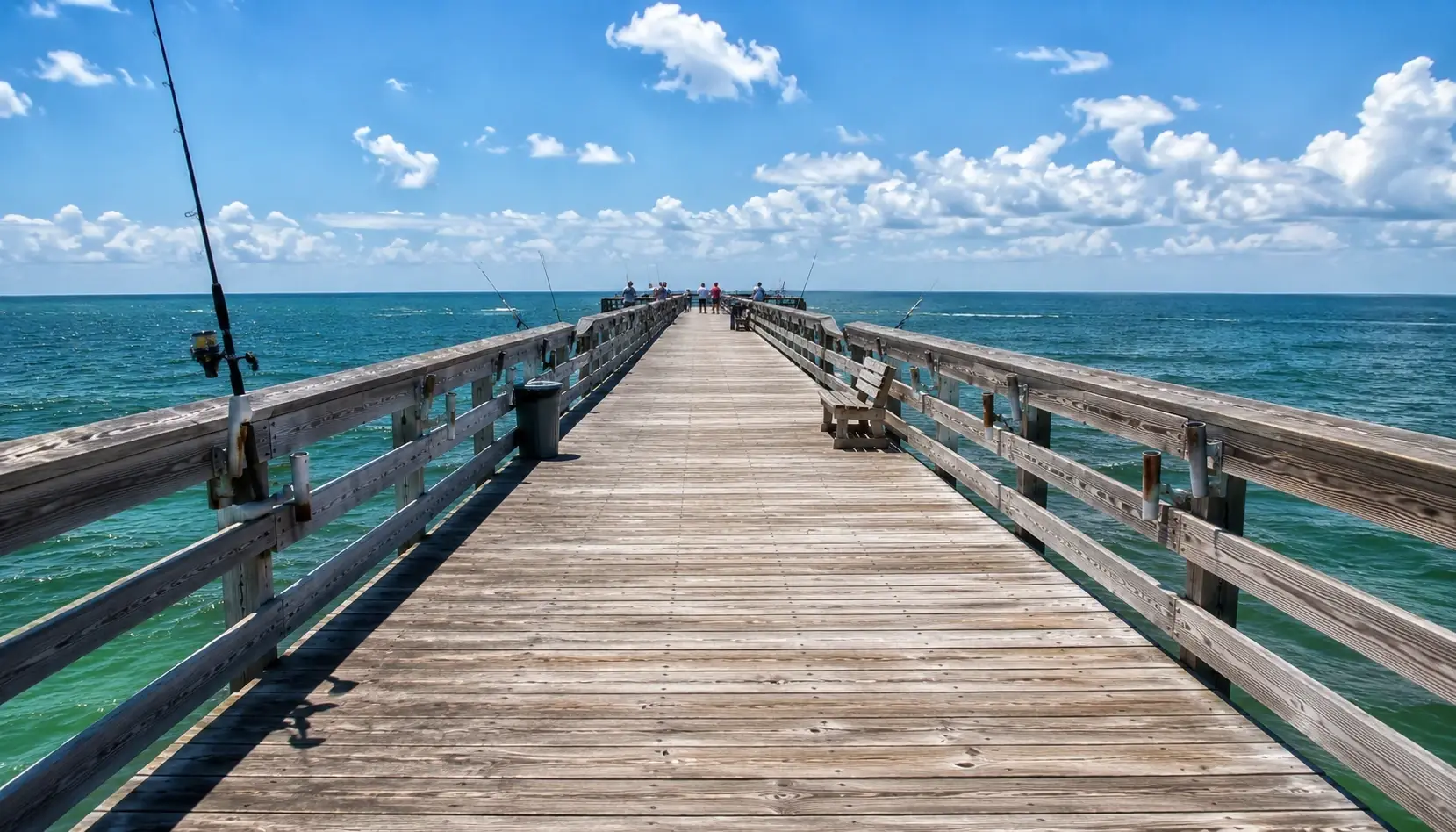
Choose Johnnie Mercer’s Pier for a fishing session you can end when your group has had enough. Choose a charter when the boat trip, captain’s guidance and access to different water are what you want to pay for. The useful comparison is total cost, time commitment and licensing, rather than a promise that a boat always catches more fish or gives everyone more room.
The pier publishes its charges; charter inclusions and cancellation terms need the specific operator’s written quote. For either option, check conditions and build parking into the budget.
Pier or charter: compare your actual constraints
| Decision | Johnnie Mercer’s Pier | A booked charter |
|---|---|---|
| Time | You can plan a shorter session within operating hours | Departure and return depend on the booked trip |
| Cost | Published rod-based pass and rental charges; parking extra | Quote must specify boat/private or per-person pricing and all extras |
| Gear | Bring tackle or budget for a rental | Ask exactly what tackle, bait and assistance are included |
| Mixed group | Non-anglers need their own applicable walk-out admission | Confirm whether each passenger counts toward capacity and price |
| Conditions | Check opening and weather before travel | Captain’s decision and written cancellation terms govern the trip |
| License | Pier states its blanket coverage includes its anglers | Operator must confirm blanket coverage or individual-license requirement |
The pier suits a group that may want to stop early or split into fishing and walking plans. A charter suits a group that wants the boat outing itself and can commit to its duration. Seasickness, mobility and children’s needs belong in the boat discussion before a deposit, rather than being treated as reasons a whole age group should choose one option.
Pier costs, with an example budget
The pier’s fishing page posts a day fishing pass at $8 per rod. A rental rod costs $8 and requires a $20 cash deposit, refunded when the rod is returned. These are separate amounts.
For two rods rented for one day, the posted pass and rental inputs give $16 in passes + $16 in rental charges = $32, with another $40 in refundable cash deposits. That is $72 to make available for those listed charges and deposits before parking, bait, food or other purchases. Confirm the checkout treatment and any additional tackle charges with the pier; a refunded deposit is cash needed at arrival, rather than a final expense.
One rod used with your own tackle starts with the $8 pass, before the other costs. Choose the number of rods your group will actually use. The posted rate is per rod, so counting people alone won’t produce the right budget.
Opening hours and parking need their own check
The pier FAQ has conflicting closing times. Its operating-hours answer says 6 a.m.–11 p.m., while the footer says 6 a.m.–10 p.m. It also says routine 24-hour opening isn’t available. Call 910-256-2743 before planning a late session; don’t use the later time as a guarantee.
Paid town parking is a separate charge. Use the Wrightsville parking hub and the sign for your space, since rates and hours vary by location. The first beach-day guide covers that arrival decision.
For companions who prefer a walk, the Loop, pier and museum guide gives another route. Confirm non-fishing pier admission separately rather than assuming a fishing pass covers every person in the group.
Licensing: coverage depends on where and how you fish
North Carolina Marine Fisheries says anglers age 16 or older generally need a Coastal Recreational Fishing License to take finfish recreationally in coastal waters. Relevant exceptions and blanket coverage change how that applies to a particular outing. Size and possession limits still apply.
The pier says its blanket license covers fishing there. That coverage doesn’t extend your pier pass to a beach or jetty side trip. State license FAQs explain shore licensing and say for-hire operators may choose whether to buy blanket coverage. A charter patron therefore needs to confirm coverage; paying for a charter alone doesn’t settle the license requirement.
Ask the operator, “Does this booked trip include valid blanket license coverage for every angler, or do eligible passengers need their own CRFL?” If the answer conflicts with state requirements, resolve it with Marine Fisheries before fishing. An operator’s assurance doesn’t override the authority’s rules.
What to get in a charter quote
This guide compares the formats without ranking charter companies. Before paying, request a quote for the actual date, passenger count and trip length. Ask for the departure slip, boat and captain, passenger capacity, life jackets appropriate to each rider, mobility limitations, toilet provision and what happens when someone needs to return early.
For cost, list the trip charge, deposit, balance deadline, tackle and bait, fuel charges, fish cleaning and any other extras. For weather, read who decides a cancellation, when the decision is made, and whether it leads to a refund, credit or reschedule. Your own cancellation can have different terms from the captain cancelling the trip.
Ask what fishing is realistic for that season and trip duration, and what the captain proposes if the target species isn’t active. A catch expectation should remain an expectation. Don’t choose a longer offshore trip simply because a general guide assumes it has more space or better results.
Casting from the beach is a separate plan
The town’s pier buffers regulate surfing near structures. They aren’t a general angler exclusion rule, and they don’t authorize fishing in every part of the strand. Read any separately posted restrictions, keep hooks clear of other beach users, and ask town staff about a doubtful location.
Sort the shore license before moving off the pier. The format that best fits your day is the one whose full cost, coverage and conditions your group understands. For a weather cancellation, keep the rainy-day alternatives available without treating an indoor fallback as compensation promised by a charter.