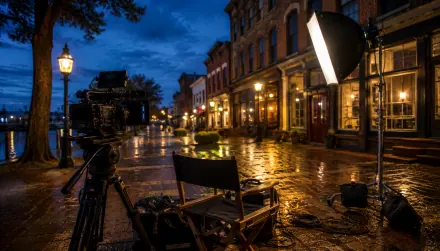
Twenty minutes before departure, a small crowd collects around a wooden sign on the riverfront at the foot of Market Street while a guide in period dress works down a list of names. That is how the Ghost Walk of Old Wilmington begins, most nights of the year. Ninety minutes and about a mile of brick sidewalk later, you will have heard why a churchyard on Third Street is older than the church beside it, and why the ground under a house on Market Street unsettles the people who work in it. The walk suits curious adults, teenagers, and most grade-schoolers. The stories are told as legend. The history underneath them is documented, and it is the better half of the evening.

What 90 minutes on the Ghost Walk actually looks like

The Ghost Walk has been running since 1978, and its costumed guides tell eerie tales at the sites they stop at. That is the format. You stand on a sidewalk in a loose semicircle, a guide talks for five or six minutes, and the group moves a block and does it again. Come expecting storytelling. The 90 minutes are mostly history, delivered on foot.

What keeps it from feeling like a lecture is that the route is not fixed. The tour’s own page says the walk draws from more than 30 researched sites and varies from night to night, so two people who take it in the same week can compare notes and find they saw different blocks.

The mile is flat but old. You walk brick and cobblestone in the dark, past houses that predate the republic, and the walk goes out in the rain. Guides encourage cameras, and enough guests take that seriously that a fair number of the stories you hear are about photographs.

Where you meet, and where you end up

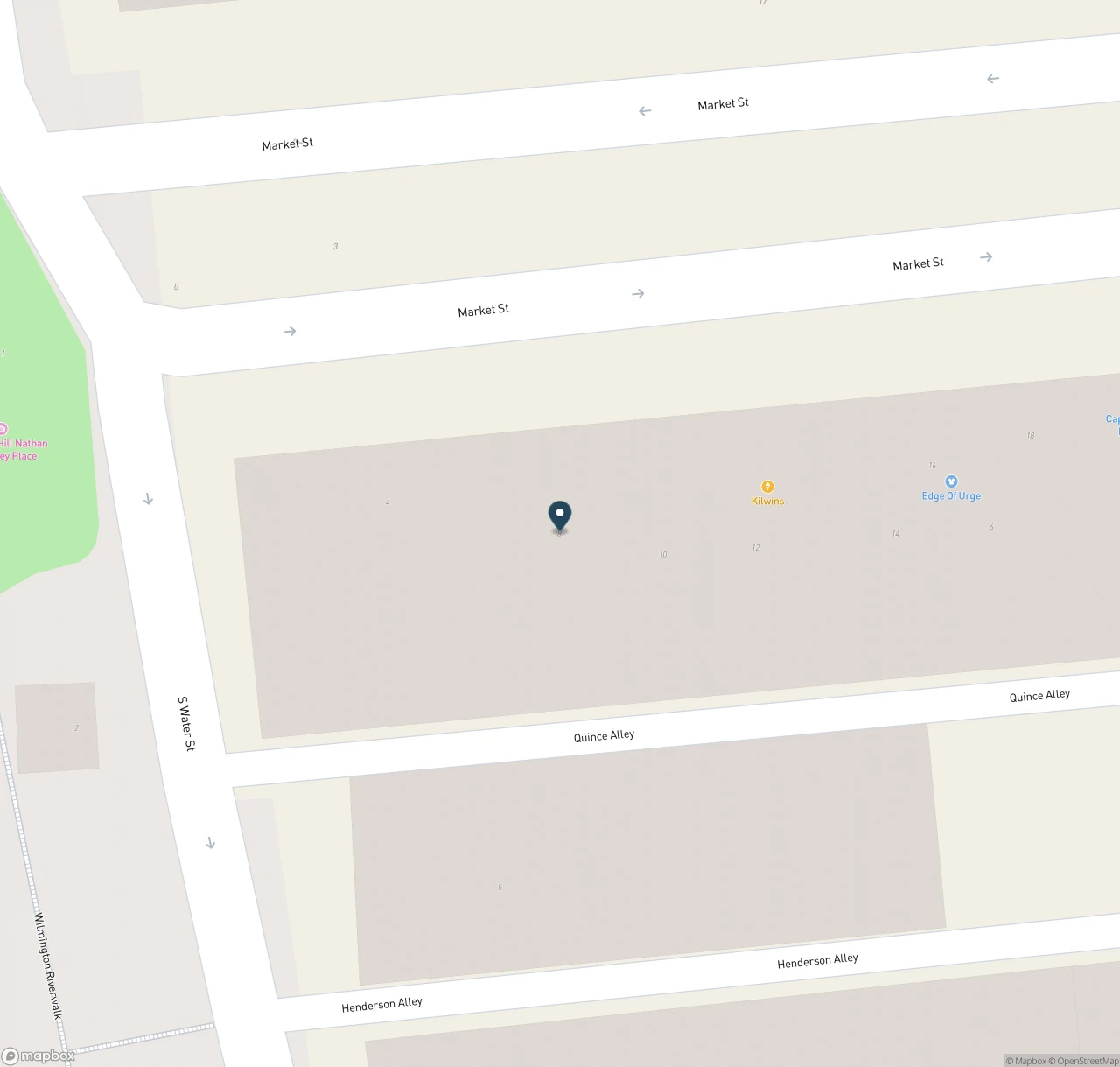
The meeting point is the Ghost Walk sign on the riverfront at Market and Water streets. Navigate your phone to 8 Market Street, the Black Cat Shoppe, the storefront the same family runs a few steps away. Check-in opens 20 minutes before departure, and there is nothing to print. Your name is on a list.

No ending point is published anywhere. A route drawn fresh each night from thirty-odd sites will not finish in the same place twice, so ask your guide at check-in where you will be standing when it wraps, and plan the rest of the evening from there. If you have the 8:30 departure, eat first. The blocks around the sign are dense with kitchens, and our guide to where to eat in downtown Wilmington covers the ones worth a reservation.

Why Wilmington carries this much ghost lore

Wilmington has been a working port since the 1740s, and the institutions that come with a port town arrived early and stayed close together. The first city jail went up around 1744 on Market Street. British troops occupied the town in 1781, and Lord Cornwallis moved into a merchant’s house four blocks from the water. Public hangings drew crowds to a rise near Fifth Street in the early 1800s. Union forces took the Episcopal church at Third and Market for a hospital in February 1865. Confinement, occupation, execution, and dying men all fit inside the mile you are about to walk, and none of it required a ghost.

Every haunting on this tour is legend. Nobody has verified a levitating book or a word written in frost, and the guides are careful about which claim is which. Across the river, the Battleship NORTH CAROLINA runs its own haunted programming each fall, which we cover in our guide to Ghost Ship at the Battleship.

The stops, and why each one is haunted

The operator names six sites in its own materials. Local coverage of the tour has named several more, including the first one below. Any given night draws on some of them.

Burgwin-Wright House, built over the city jail

John Burgwin built his house at 224 Market Street in 1770 on the site of Wilmington’s first city jail, which had stood there since about 1744, and the house museum’s own history confirms both dates. Eleven years later, Lord Cornwallis occupied the place for three weeks and used it one evening to entertain his officers, which is why people here still call it the Cornwallis House. A colonial jail, then a general’s requisitioned dining room, then two and a half centuries of quiet. Guides do not have to work hard at this one.

St. James Church and a graveyard older than it

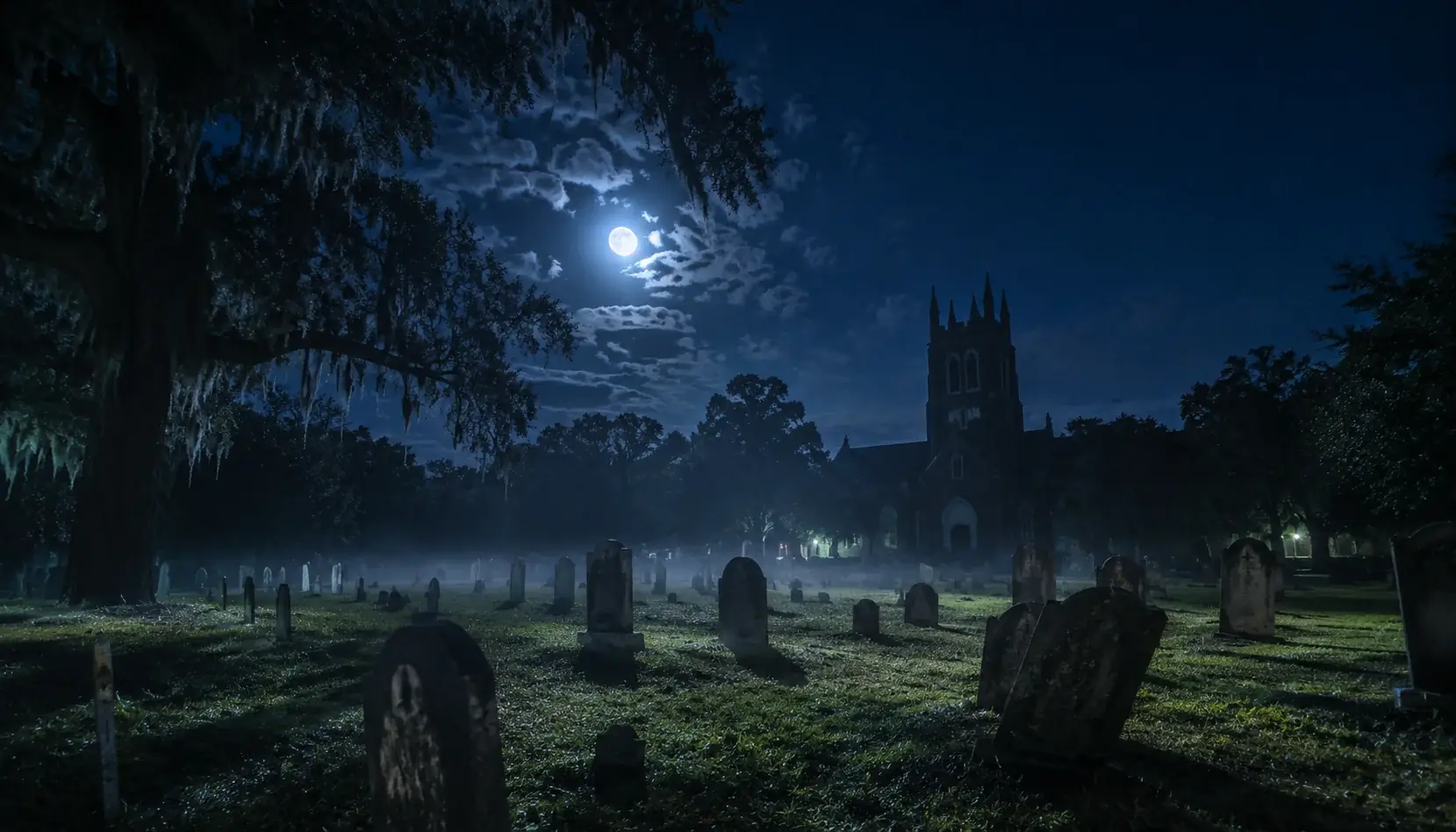
The churchyard at Third and Market holds a stone that predates the building beside it by more than eighty years. William Hunt, a 19-year-old sailor from New Jersey, was buried there in 1757, and the present church was not consecrated until March 29, 1840, a sequence the parish’s own timeline lays out. Union forces seized the building as a hospital in February 1865 and gave it back that summer. The ghost story attached to the yard belongs to Samuel Jocelyn, a young man local legend says was buried alive after a fall and heard scratching at his coffin lid. The sailor, the hospital, and the eighty-three-year gap are the documented parts.

Gallows Hill and the Price-Gause House

In the early 1800s, public hangings took place on a rise near Market and Fifth streets, and WWAY’s reporting describes them as a social occasion that drew a crowd. Men condemned here had often shipped in from other ports with nobody to claim them, so trenches were dug near the gallows and they were buried where they fell. Dr. William Price built a house on that ground at 514 Market Street in 1860, apparently without knowing what lay under it. An architecture firm works out of it now, and the accounts its occupants and the tour’s owner have given over the years run to footsteps climbing the stairs, figures in old clothing at the windows, and the word “help” appearing in frost on the glass. This is the stop people remember, and every word of the haunting is testimony.

Bellamy Mansion, across the street

The mansion at 503 Market Street stands directly opposite the Price-Gause House, on the same ground. It was built between 1859 and 1861 to a design by James F. Post, and the museum states plainly that it was constructed primarily by skilled enslaved workers and free Black artisans. The two-story brick quarters where the enslaved household lived still stands on the northeast corner of the lot, restored in 2014 and among the best-preserved buildings of its kind in the country. That building is the record of the people who were enslaved there, and it is the most important thing on the block. Any guide worth the fee says so before moving on.

Latimer House on Third Street

Zebulon and Elizabeth Latimer finished their Italianate house at 126 South Third Street in 1852 and raised nine children in it. Four sons lived to adulthood. The Lower Cape Fear Historical Society, which has owned the house since 1963, records both numbers without comment, and the arithmetic is what the tour’s Latimer segment is built on. The tour’s version adds a book that moves on its own upstairs. The number five is what stays with you.

The old Masonic lodge and the courthouse

Two civic buildings round out the operator’s list, and the lodge is the more interesting. North Carolina’s Department of Natural and Cultural Resources records that St. John’s Lodge No. 1 was chartered out of England in 1755, making it the oldest Masonic lodge still working in the state, and that after a fire the members laid the cornerstone of a new hall on Orange Street on June 12, 1804, with walls eighteen inches thick. The Masons used it until 1981. The courthouse went up in 1892 a few blocks from both the old jail site and the gallows, which is the point the pairing makes. In a town this size, the sentence and the scaffold were an easy walk apart.

Which ages the walk suits

The operator calls the tour family safe, and children 6 and under go free. No minimum age is posted anywhere, which leaves the call to you.

There is nothing graphic to look at, because there is nothing to look at except houses and a guide talking. The material covers executions, a man buried alive, a household that buried five children, and a church full of wounded soldiers. Grade-schoolers who already like spooky stories generally do fine with it. A seven-year-old who is frightened of the dark will have a long 90 minutes.

The harder constraint is physical. A mile of uneven brick sidewalk after dark, most of it spent standing still, is a real ask for a toddler and an awkward one for a stroller. The 6:30 departure ends around 8 p.m. and is the family slot. The 8:30 puts you back on the street near 10. Teenagers and adults are the tour’s natural audience, and it makes a good date-night hour if being startled was never the point.

FAQs

Do I need to book the Ghost Walk in advance?

Book ahead if the night matters to you. The operator says capacity is limited and tours sell out early, and October evenings are the tightest of the year. Nothing gets printed, so your name simply goes on a guest list you check in against 20 minutes before departure. There is also a two-person minimum, and a departure that does not reach it gets canceled and refunded, which is worth knowing if you are a solo traveler booking a quiet Tuesday in February.

Where should I park downtown for an evening tour?

The tour’s FAQ page points guests to free on-street parking after 6:30 p.m., which covers both departures, though the spaces closest to the riverfront go first on weekends. The city decks at 115 Market Street, 114 N. Second Street, and 218 N. Second Street are the reliable fallback and leave you a short walk from the sign. Public restrooms sit at the riverfront information booth beside the meeting point and inside the 115 Market Street deck, and you will want one of them before a 90-minute walk.

What happens if the weather turns?

Tours go out in the rain, and guides move the group to shelter if lightning starts. The one condition that cancels a walk outright is a hurricane watch or warning from NOAA, in which case tickets are refunded in full. If the forecast is merely wet, bring a rain jacket instead of an umbrella you will be holding for an hour and a half. The Black Cat Shoppe at the meeting point sells inexpensive ponchos for the nights you guess wrong.

Is this the same thing as Ghost Ship on the Battleship?

No, and people mix them up every October. Ghost Ship is a seasonal Halloween event staged aboard the Battleship NORTH CAROLINA on the west bank of the Cape Fear River, run by the ship’s own staff for a few weeks in the fall. The Ghost Walk is a year-round outdoor walking tour on the east bank, run by a private company, and there is no ship to board. Doing both in one trip is a reasonable plan, and they will not repeat each other.

Walk it once in the dark, then again at noon

The tour hands you a map you did not know you needed. Come back down Market Street in daylight and the Burgwin-Wright gardens are open and free to walk, on the ground where the city’s first jail stood. William Hunt’s headstone is still in the churchyard at Third, 269 years on. The house on Gallows Hill has an architecture firm in it, going about its Tuesday. Confirm the current departure times on the tour’s own schedule before you book, take the 6:30 if you are bringing kids, and if the walk lets you out near the river, downtown’s rooftop and waterfront bars stay open well past ten.